
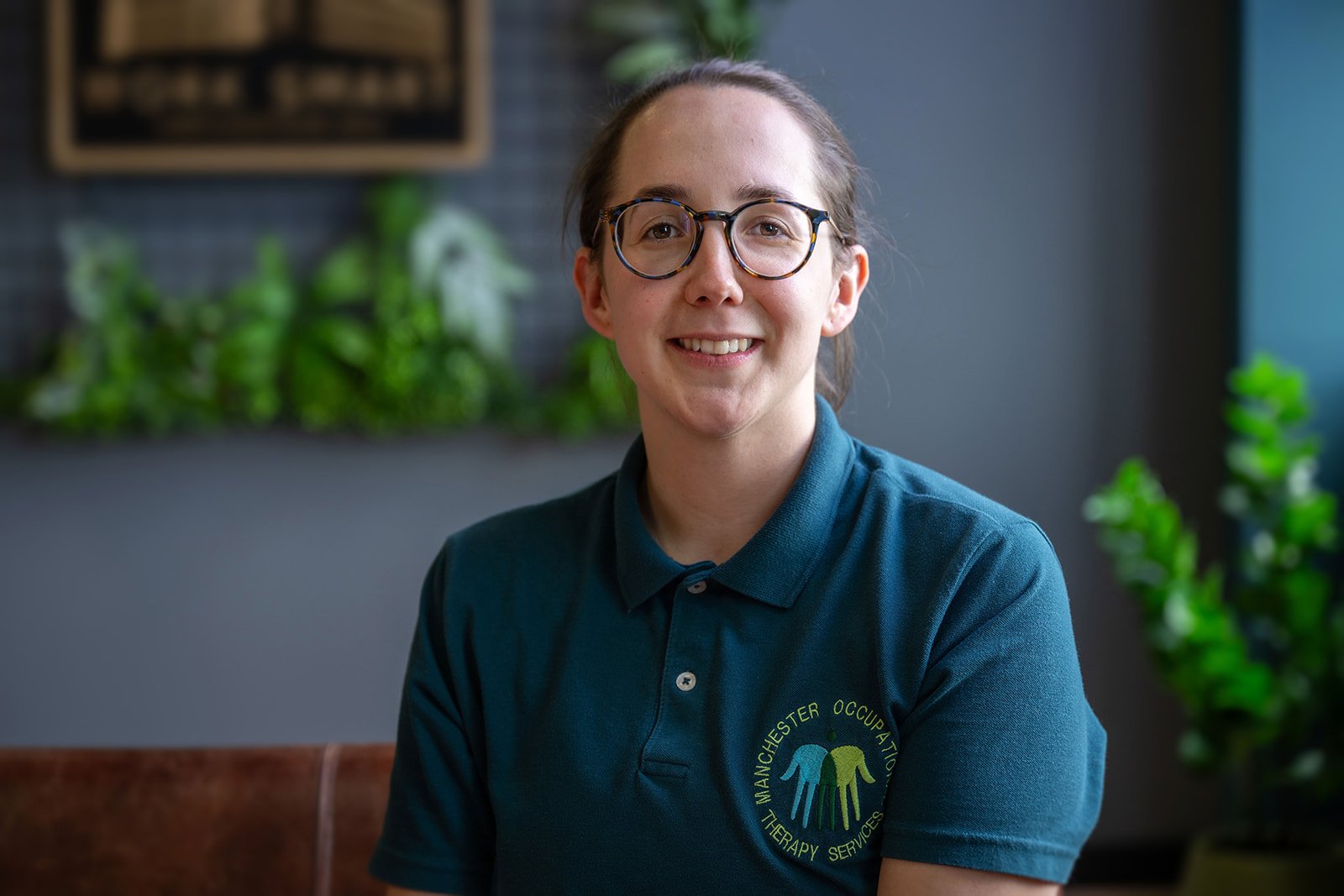
People often ask, ‘What is an occupational therapist?’ Then, they’ll ask ‘But what does an occupational therapist DO?’
Good question. However, attempting to describe an ‘average’ day in the life of an OT is difficult: no two days are ever the same. That said, we’re never ones to shy away from a challenge, so we asked one of our superb Occupational Therapists to give us an idea. You can find out more about all our therapists on our Meet the Team page. Everyone on the team has at least this in common: they’re qualified, motivated and empathetic, and they love helping their clients.
The Occupational Therapist’s Caseload
“My caseload is split into ‘school-based days’ and ‘caseload days.’ These can vary tremendously. But one thing is the same EVERY day. Each day starts with a cup of coffee in the car on the way to work!”
We can all relate to that, can’t we?
In school settings, there is typically more of a focus on practical strategies to help the students. This could mean intervention sessions and recommendations for the classroom.
“The day will involve a variety of 1:1 intervention sessions, addressing sensory regulation, fine motor, gross motor, etc. There may also be group sessions and classroom observations. Sessions with students are always activity-based. I tend to complete a lot of activities on swings, or using Theraputty. I also use scooter boards and employ other fine/gross motor games.”
OT Equipment
Occupational therapists also deal with specialist equipment to aid sensory regulation and encourage engagement in class:
"We may use weighted compression vests (which offer proprioceptive input almost like a hug, to calm the central nervous system), Zuma chairs (where gentle rocking allows students to stay alert and pay attention, in a safe and non-disruptive way), Chewies which can help ease anxiety and stress, and many other pieces of specialist equipment. Using such equipment involves assessing clients’ needs, measuring students, and placing orders."
"There may also be times when other OT input is required. This could be completing standardised and non-standardised assessments, consulting with other healthcare professionals, or liaising with parents. Sometimes, I also work with Occupational Therapy Assistants in schools. In that case, time is set aside for supporting or helping them with the tasks they are completing."
An OT’s Day is Never Done…
The day isn’t done until the paperwork is:
"At the end of each school day, I allow at least an hour for documentation and note-writing. This is a legal requirement for an Occupational Therapist. I’m required to document every interaction I have with the student and every interaction I have with staff and any other healthcare professionals relating to the student. This can be time-consuming, so blocking that hour at the end of the day is essential."
"On my caseload days, I typically undertake 2-3 intervention sessions each day. These intervention sessions necessitate travel to homes and schools across Greater Manchester. Again, sessions vary hugely as they are tailored entirely to the client’s needs. Some sessions can be joint visits with other healthcare professionals or even representatives from adaptive equipment suppliers. Other sessions will be 1:1 with the client and focus on sensory regulations, fine motor skills, gross motor skills, or activities of daily living. As with the school sessions, these sessions are always activity-based and include games. This means the client has fun! They will engage in sessions without realising that they are working."
Every OT Day is Different (except for admin)
"Once more, each session must be followed up with documentation in the form of note-writing, so time is set aside for admin after every session. Caseload days can also include full OT assessments, multi-disciplinary team meetings, supervision (with my supervisor or supervisees), and professional development."
Suffice to say that all our occupational therapists’ days are busy. All our team here at Manchester Occupational Therapy Services wouldn’t have it any other way. Ours is a demanding, but incredibly rewarding profession. Even so, some tasks are a little less fulfilling. We all have them:
"Admin can sometimes feel like the most challenging aspect of the job. It’s simply not as ‘fun’ or engaging and rewarding as actual interactions with clients and their families. Administration also accounts for quite a lot of time. Administrative tasks could be:
- Scheduling sessions
- Writing reports
- Phone calls with parents
- Planning my diary
- Researching equipment
- Session planning
- Gathering resources
- Answering phone calls
- Shredding
- Any other task that needs to be completed for my days to run smoothly.
Occupational Therapy: When Every Day Matters
So, there you have it. That’s a fairly comprehensive overview of an occupational therapist’s so-called ‘average’ working day. The only part of the day not mentioned is spending time with the team here at MOTS. We’re a team and, although not always working together, we still work as a team.
“As we are community-based overall, we are not always in the office together. We make the most of it when we are. Throughout school holidays, most of us will work from the office. This gives us the chance to share ideas, discuss challenging cases or ideas for new activities, have lunch together, and generally catch up. This is really beneficial: we can provide peer support and any issues we’ve experienced, or even take our minds off work altogether. This job can be challenging and we’re always busy, so that social aspect is invaluable. We ensure we are all looking after ourselves as well.”
Invaluable indeed. We look after our team, and they support each other and improve their clients’ everyday lives. Occupational therapists, as with many other care or health care professionals, rarely stop thinking about their clients. That’s because occupational therapy isn’t just a job. We don’t clock watch or do the bare minimum, ever. An OT makes genuine connections with clients. That’s what helps the client thrive – and what makes the OT’s job special.