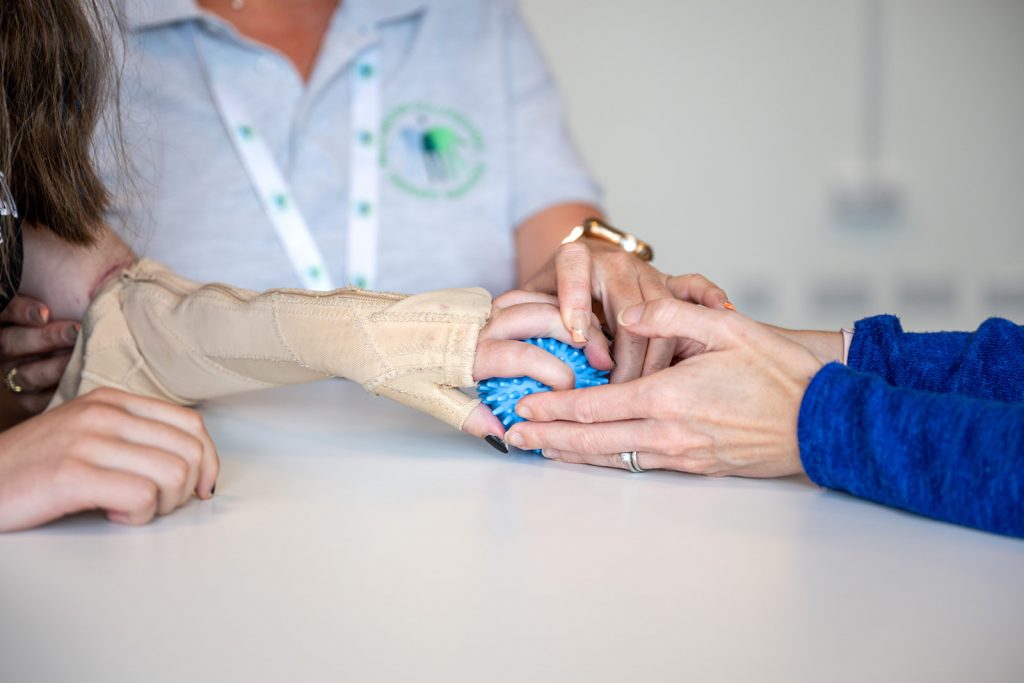
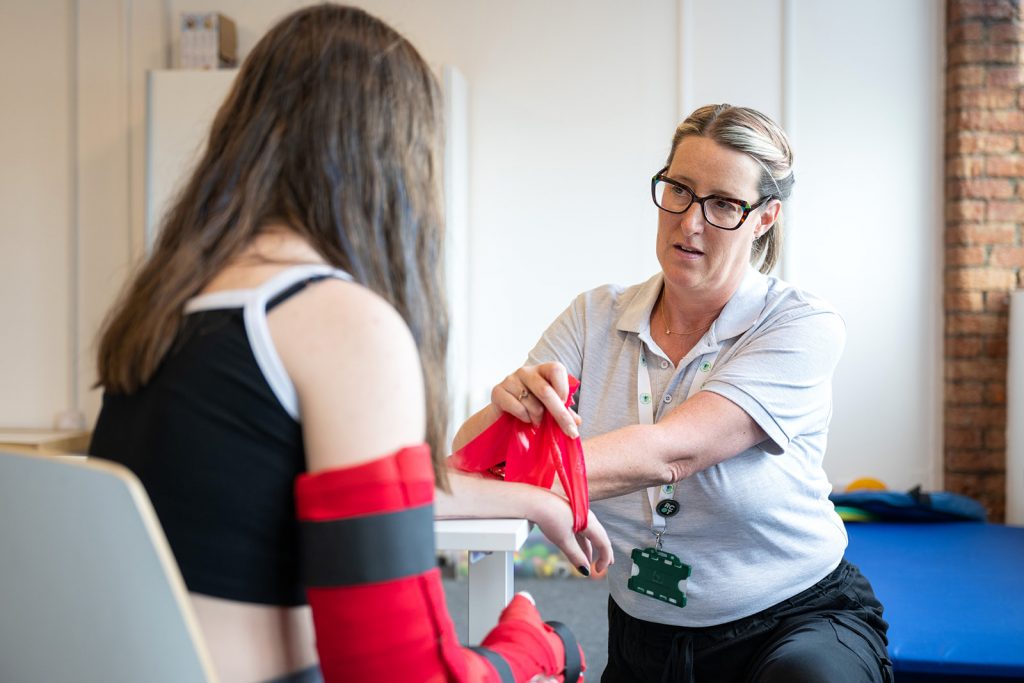
Manchester Occupational Therapy Services offers a wide range of handwriting support. This includes 1:1 handwriting sessions where individualised help and support are tailored to the individual. The Speed Up programme can be delivered on a one-to-one or group basis in the clinic, school, and home. We offer handwriting support within our SLA contracts for groups and individuals, as the school requires.
Handwriting sessions look at aspects of handwriting including core strength, shoulder stability, fine motor skills, pencil control, letter formation, visual motor skills and other aspects the Occupational Therapist feels will benefit the client.


Interoception is the sense that allows a person to feel what’s happening inside their body for example, awareness of hunger or thirst. It’s how we know when to eat, drink, or rest for example. This sense also affects emotions and decision-making. Interoception can be supported by Occupational Therapy, to help individuals understand and respond to their body’s signals, which is essential for daily functioning. Occupational Therapists work with clients to improve their interoceptive awareness, supporting them to manage emotions and understand what self-regulating behaviours can look like. The aim of this is to increase emotional intelligence and independence when facing challenges.
The Brick Club programme offers children positive, meaningful social experiences in an understanding, playful and accepting environment. Brick Club supports members to collaborate, communicate, solve problems, and share experiences through collaborative Lego play.
Brick Club brings a child-led approach, tailored to every child’s strengths, interests and needs. Play has a well-documented fundamental role in children’s development. Brick Club provides social opportunities and creates a sense of belonging and pride.
The Brick-by-Brick programme supports young people who may struggle with social and emotional wellbeing and communication difficulties. Brick Club is suitable for people of all ages, from preschool to adulthood and is beneficial to anyone who enjoys Lego.

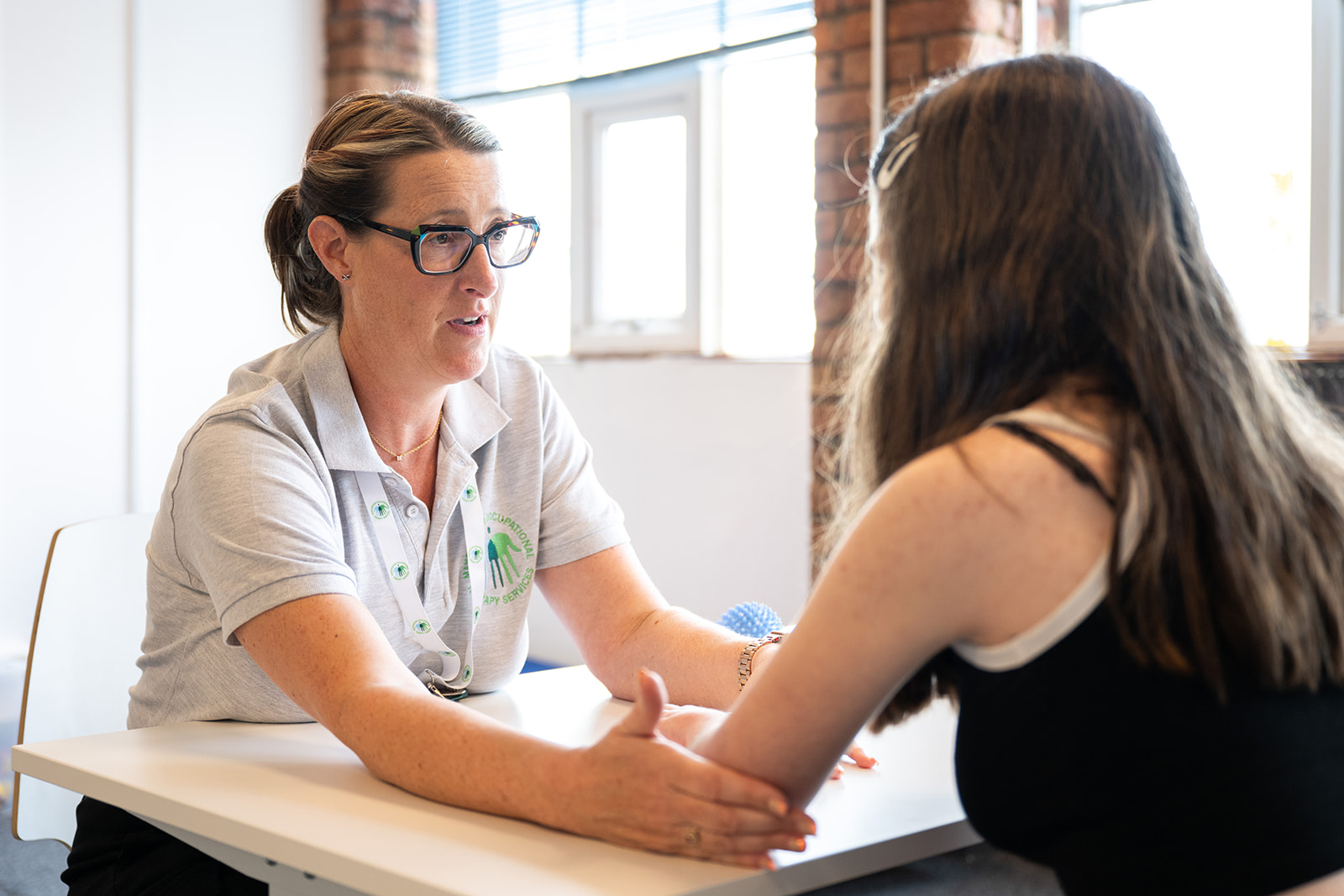
Manchester Occupational Therapy Services have specialist Occupational Therapists and Occupational Therapy Assistants, trained to provide Constraint Induced Movement Therapy (CIMT).
CIMT is a unique treatment approach used for rehabilitation of the upper limbs (arm/hand) following neurological damage such as Hemiplegia or a Stroke. It is common for individuals diagnosed with hemiplegia or those who have had a Stroke to have one-sided neglect in their weaker arm which can lead to learned non-use. When an individual participates in an intensive course of CIMT, the therapeutic aim is to increase the amount of use and quality of movement of the affected arm.
The treatment programme works by promoting the ‘rewiring’ of the brain. This means that a larger part of the brain becomes active when producing movement of the weaker arm. A non-removable cast is employed to restrain the unaffected arm alongside targeted therapy. This therapy aims to improve awareness and use of the affected arm, which stimulates the formation of new pathways for movement. We advocate the non-removable cast – not a removable hand or wrist mitt – to enforce twenty-four-hour CIMT, for greater therapeutic effect. The cast maintains the non-affected arm in a static position including the upper arm, elbow, wrist and fingers. The static posture of the non-affected side further assists in reducing tone in the affected upper limb consequently promoting increased functional use. (1)
Repeated use of the affected upper limb over a relatively brief time produces lasting change. This programme is underpinned by extensive research. We have also seen significant clinical differences using this technique for an individual who experienced mirrored upper limb movements where CIMT was used to promote unilateral skills and hand dominance.
Current research suggests that clinically significant improvements in the function of the affected upper limb are greatest when the programme continues over three weeks. We make a cast of an individual’s non-affected side (similar to a cast worn after a fracture). This is replaced three times during the treatment to retain skin integrity. During treatment, we provide intensive Occupational Therapy intervention for the individual for three hours a day, Monday to Friday, for three weeks. After this time, the cast is removed, with a recommended option for a week of continued Occupational Therapy intervention to promote bilateral (two-handed) activities. This allows for the use of the new skills acquired in the affected limb and to incorporate this into daily life to ensure continued success.
Usually, our CIMT program is provided within the clinic. However, the same results have been achieved in an individual’s home or educational setting. Before commencing a course of CIMT, an individual would be invited to attend an assessment. Here, a Specialist Occupational Therapist would assess the client to ensure that CIMT is the right approach for them.
Manchester Occupational Therapy Services appreciates that everyone is an individual and that it is not always practical for our clients to complete the full intensive course. We also provide CIMT over varying durations and frequencies. Please contact us for further details.